Chasing the Dumble Sound: The Story Behind the Sleepwalk Singer-Land
I've always been fascinated by unusual amplifier designs, particularly the ones that do something a little differently from everything else.
I've also always been a big fan of Stevie Ray Vaughan's playing, and separately, I'd developed an interest in Dumble amplifiers and some of their unusual circuitry.
When I discovered that Stevie Ray Vaughan had used Dumble amplifiers, it brought those two interests together.
I was particularly interested in the Dumbleland and Steel String Singer. Both were designed to produce an enormous amount of clean headroom, using some fairly unusual circuitry that you don't typically find in guitar amplifiers.
The Dumbleland came first and could be voiced for bass or guitar, while the Steel String Singer developed from those earlier ideas with more of a focus on guitar.
I wanted to understand how these amplifiers worked, and eventually have a go at building something along those lines myself.
The problem was, there wasn't much information available.
Working from a blurry photograph
At the time, I only had access to a couple of photographs of the early Steel String Singers, including a blurry picture of the inside of one of the amplifiers.
I spent weeks studying that photograph, trying to decipher the components and work out how the circuit might have been put together.
There were plenty of gaps, so a lot of the process involved working backwards from what I could see and what I already knew about amplifier design.
I was also spending a fair bit of time on The Amp Garage, an online forum for amplifier builders and enthusiasts. There were people there who knew bits and pieces about these rare amps, and I'd go back and forth with them trying to piece everything together.
I'd also spoken to someone who had actually played a Dumbleland, which gave me another perspective on how the amplifier sounded and responded.
Someone might mention a particular feature or describe how something behaved, and I'd start thinking about what would need to be happening inside the circuit to produce that result.
I spent a lot of time studying other amplifier designs, comparing different approaches and working out which arrangements made sense.
It was a bit like putting together a puzzle without knowing exactly what the finished picture was supposed to look like.
Building the Singerland
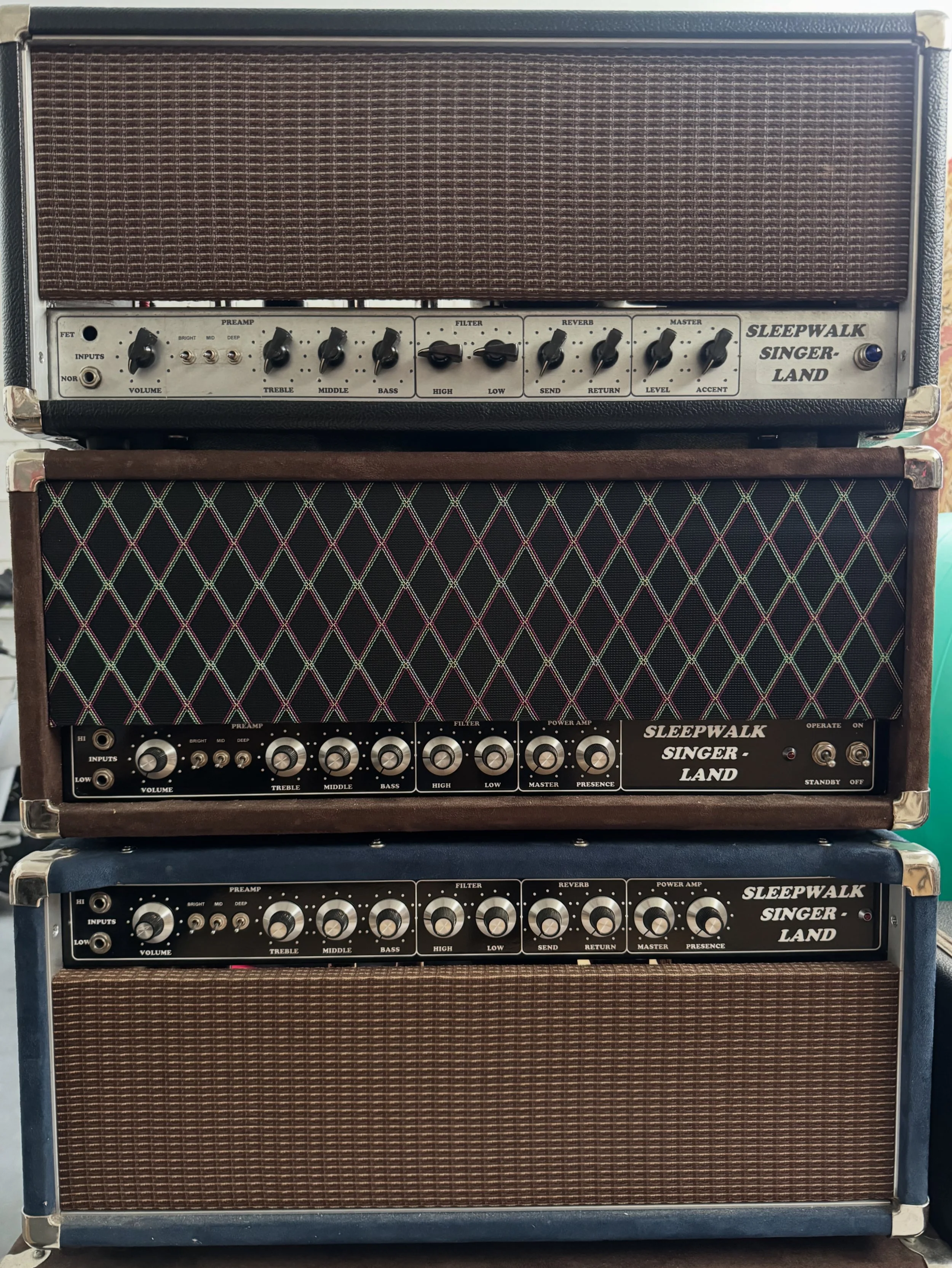
Eventually, I had enough of an idea to start building what would become the Sleepwalk Singer-Land.
It was actually one of the first amplifiers I built, and I was building it for myself. After spending so much time researching and trying to understand the original designs, I wanted to see what I could come up with.
I was happy with it pretty much straight away.
It had the sound and response I'd been looking for, and I didn't need to make any significant changes to the original build.
An interesting discovery
Years later, in 2026, detailed information about the circuitry inside an original Dumbleland amplifier became publicly available.
After spending so much time working through how I thought these designs might have been put together, it was interesting to finally have something to compare against.
Quite a lot of what we'd pieced together through photographs, discussions and deduction turned out to be remarkably close to the original circuitry.
Making it my own
Although the Singer-Land was inspired by Dumble's designs, I've never felt the need to stay completely faithful to the original circuits.
Every Singer-Land I build is voiced and customised for the person who'll be playing it. Different guitarists have different preferences, and what sounds great to one person might not be quite right for someone else.
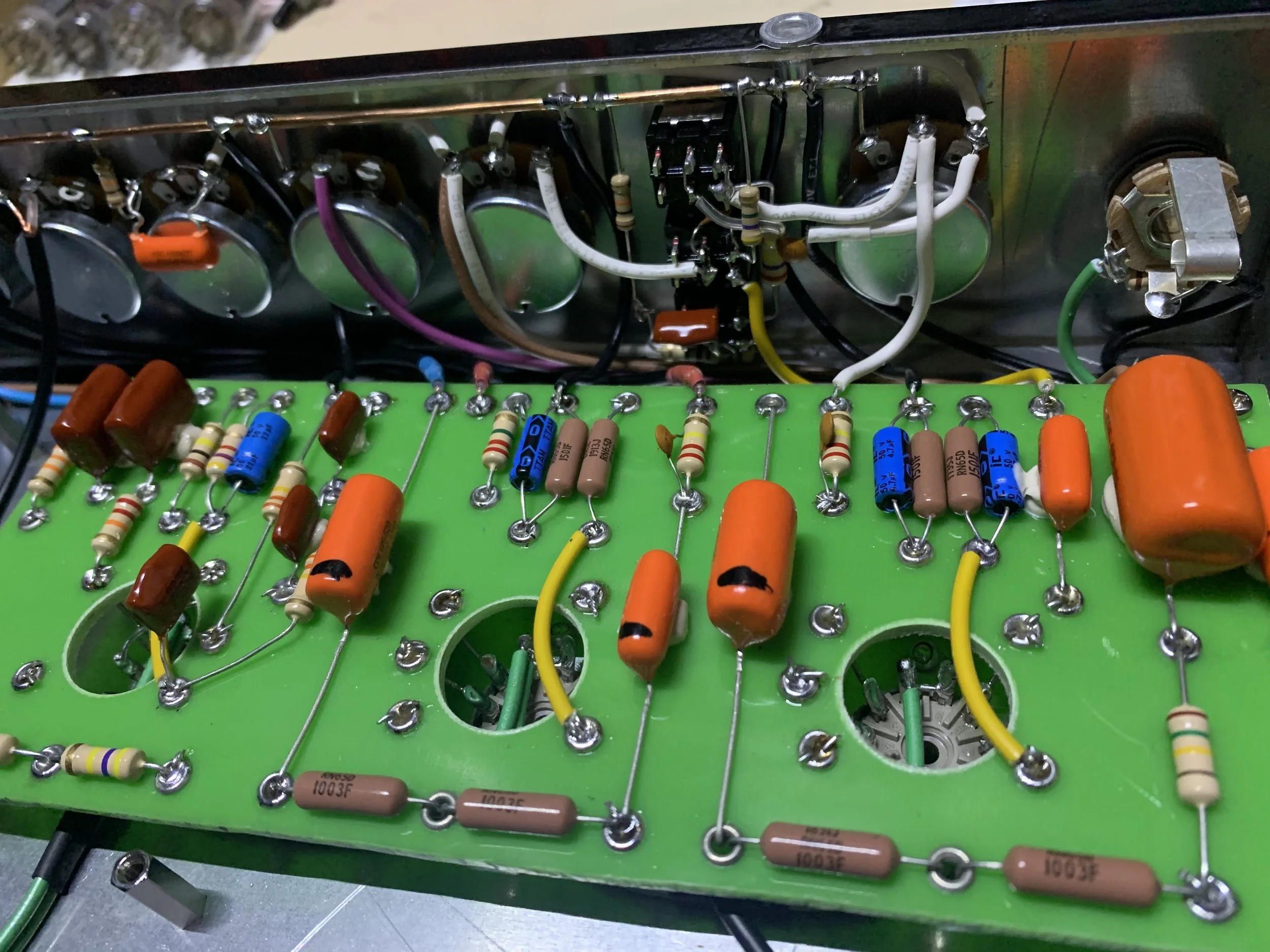
For me, the interesting part is understanding what makes those original designs work, then using that knowledge to build an amplifier that achieves the sound and response a particular player is looking for.
There's the technical side of amplifier design, but there's also a lot of listening, experimenting and thinking through different possibilities.
The Dumble circuits were the starting point, but the Singer-Land has developed into its own thing.
And as for that very first Singer-Land I built for myself?
I've still got it. It's sitting in my workshop.