NERDSPEEK: Polyester vs Polypropylene FILM CAPACITORS
Component selection, dielectric properties and observations from an early Sleepwalk build.
Background
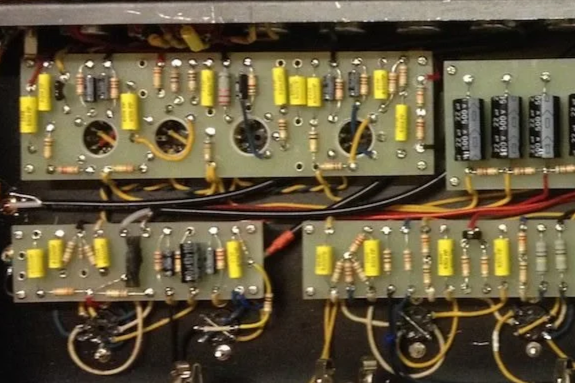
In one of my early amplifier builds in 2014, I used inexpensive polyester film capacitors. The amplifier sounded good, so I left it as it was.
For a subsequent build, I decided to use more expensive 715P and 716P polypropylene Orange Drop capacitors.
The result was noticeably different. The amplifier sounded brighter and harder than I wanted, with a pronounced top-end edge.
I began experimenting with different capacitor types, eventually replacing the polypropylene Orange Drops with polyester 6PS Orange Drops in the preamp, reverb and mix stages, while retaining the polypropylene 716P capacitors in the phase inverter (PI) and driver stages.
The change produced a more rounded sound, without the hard top-end character I'd disliked.
It was an early lesson in the importance of component construction, and how selecting different capacitors for different parts of a circuit can help achieve the desired result.
Polyester and Polypropylene
Both polyester (PET) and polypropylene (PP) are widely used dielectric materials in film capacitors.
There are measurable differences in their electrical properties.
Polypropylene generally offers lower dielectric losses and better stability. However, these characteristics don't automatically translate into better results in every guitar amplifier circuit.
The Orange Drop range itself includes both polyester and polypropylene constructions, so the brand or appearance of a capacitor doesn't identify its dielectric.
Tonal Observations
In my early builds, I found the polyester capacitors produced a warmer, softer sound, with a slightly more textured or distorted character.
The polypropylene capacitors produced a brighter, tighter sound, with more defined edges but less of the warmth I preferred in certain circuit positions.
The closest analogy would be an HB pencil compared with charcoal. The polypropylene sounded more like the pencil — precise, with harder edges. The polyester had the softer, more textured character of charcoal.
Importantly, the difference wasn't simply a reduction in bass.
In a coupling circuit, increasing capacitance can lower the high-pass cutoff frequency and allow more low-frequency content through. But changing the frequency response doesn't necessarily reproduce all of the characteristics perceived in the original sound.
Increasing the capacitance might have produced a fuller response, while retaining the tighter character I disliked.
Capacitance, Tolerance and Circuit Position
Capacitor value is an important variable when comparing components.
A nominal 22 nF capacitor with a ±10% tolerance can measure anywhere between 19.8 nF and 24.2 nF. In frequency-dependent networks, this variation can affect the response independently of dielectric construction.
For this reason, I measure capacitance values when selecting components.
Circuit position is also important. Coupling, bypass and frequency-shaping applications impose different electrical requirements, and the significance of dielectric losses, leakage and other non-ideal characteristics varies accordingly.
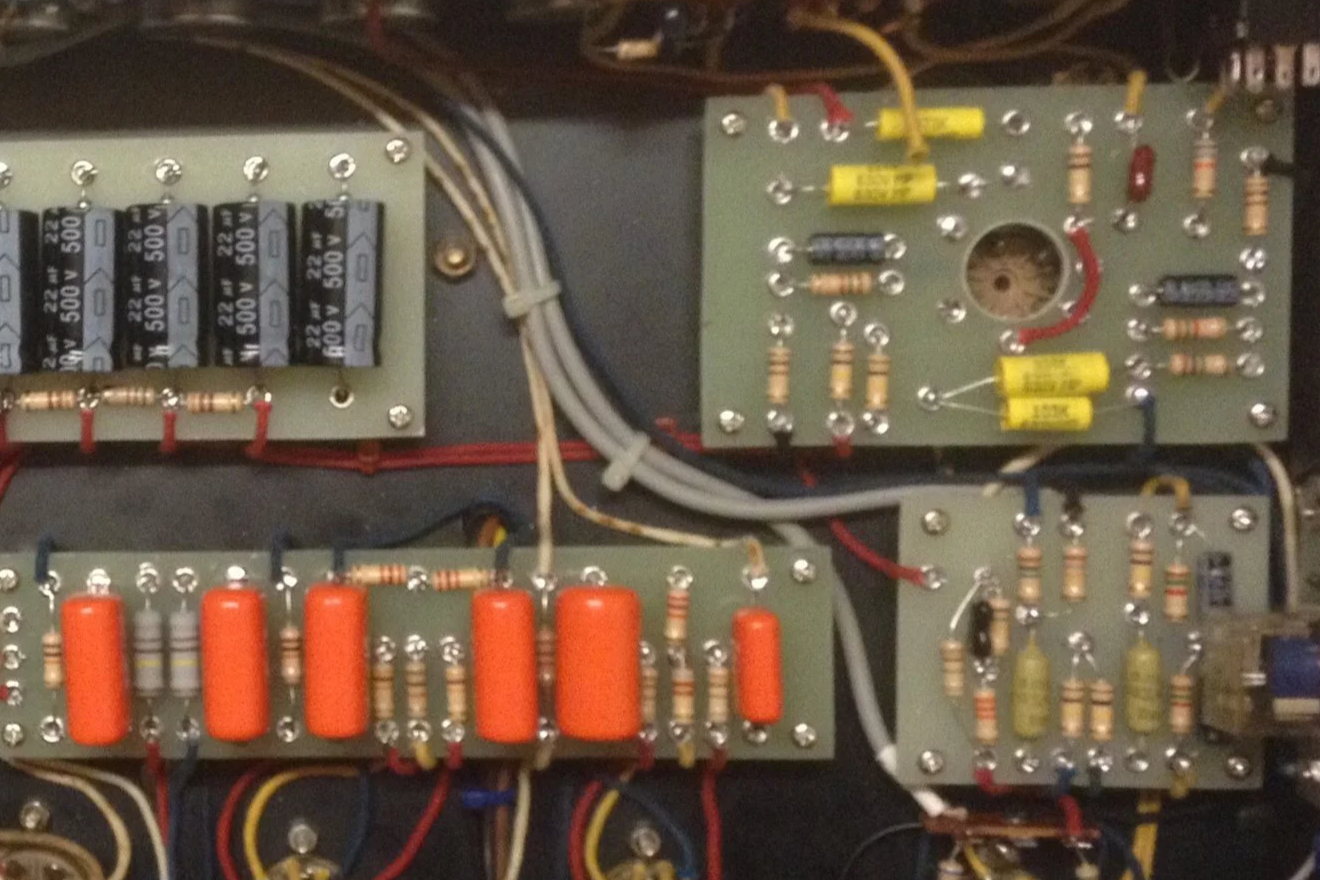
These early builds weren't controlled experiments. The initial comparison involved different amplifiers, and the subsequent changes involved multiple capacitor positions within the second circuit. It's therefore not possible to attribute the entire tonal difference to dielectric material alone.
Nevertheless, the experience highlighted the importance of considering component construction as well as nominal value, and demonstrated how a combination of capacitor types could produce a more desirable overall result.
Application in Sleepwalk Amplifiers
I continue to use both polyester and polypropylene capacitors.
My subjective preference is generally for polyester where I'm looking for a warmer, softer character, while polypropylene can be useful in positions where I want a tighter, more defined result.
These are working preferences based on my experience, rather than universal properties that can be assumed to produce the same audible result in every circuit.
Component selection ultimately depends on the intended response, the surrounding circuitry and the measured characteristics of the parts themselves.
The main lesson from those early builds was straightforward: higher component cost and better individual electrical specifications don't necessarily produce a more desirable amplifier sound.